
Project
Growing Saffron crocuses in an aquaponics system
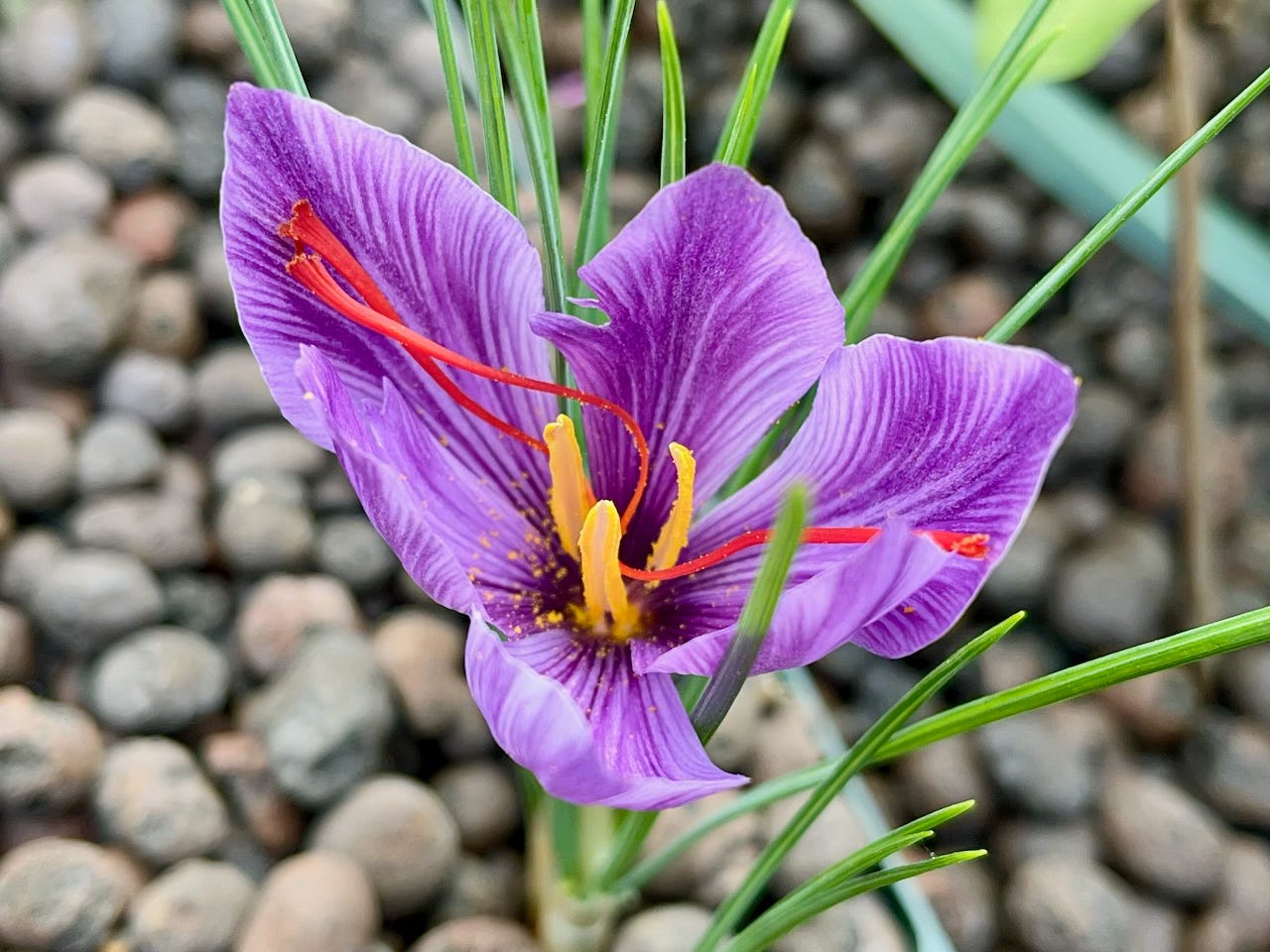
Flower bulbs generally prefer a less humid environment. Is it therefore advisable to grow them in an aquaponics system with ebb and flow? Although specialized aquaponics groups were quick to conclude that it may not be feasible, we believe that an experiment is not really an experiment until we actually try it out.
Published November 1, 2023
The Saffron crocus (Crocus sativus) is a flowering plant belonging to the family Iridaceae. It is best known for producing saffron, one of the most expensive spices in the world. The plant has purple-violet flowers with bright orange stigmas, which are harvested and dried to produce saffron.
What is Aquaponics?
Aquaponics is an integrated system that combines aquaculture (fish farming) and hydroponics (growing plants in water). In this system, the water from the fish culture tanks is filtered to remove fish excrement, which then serves as a nutrient for the plants. The plants in turn purify the water by absorbing the nutrients, after which the clean water flows back to the fish farm tanks. This closed system enables sustainable food production with minimal waste of water and nutrients.
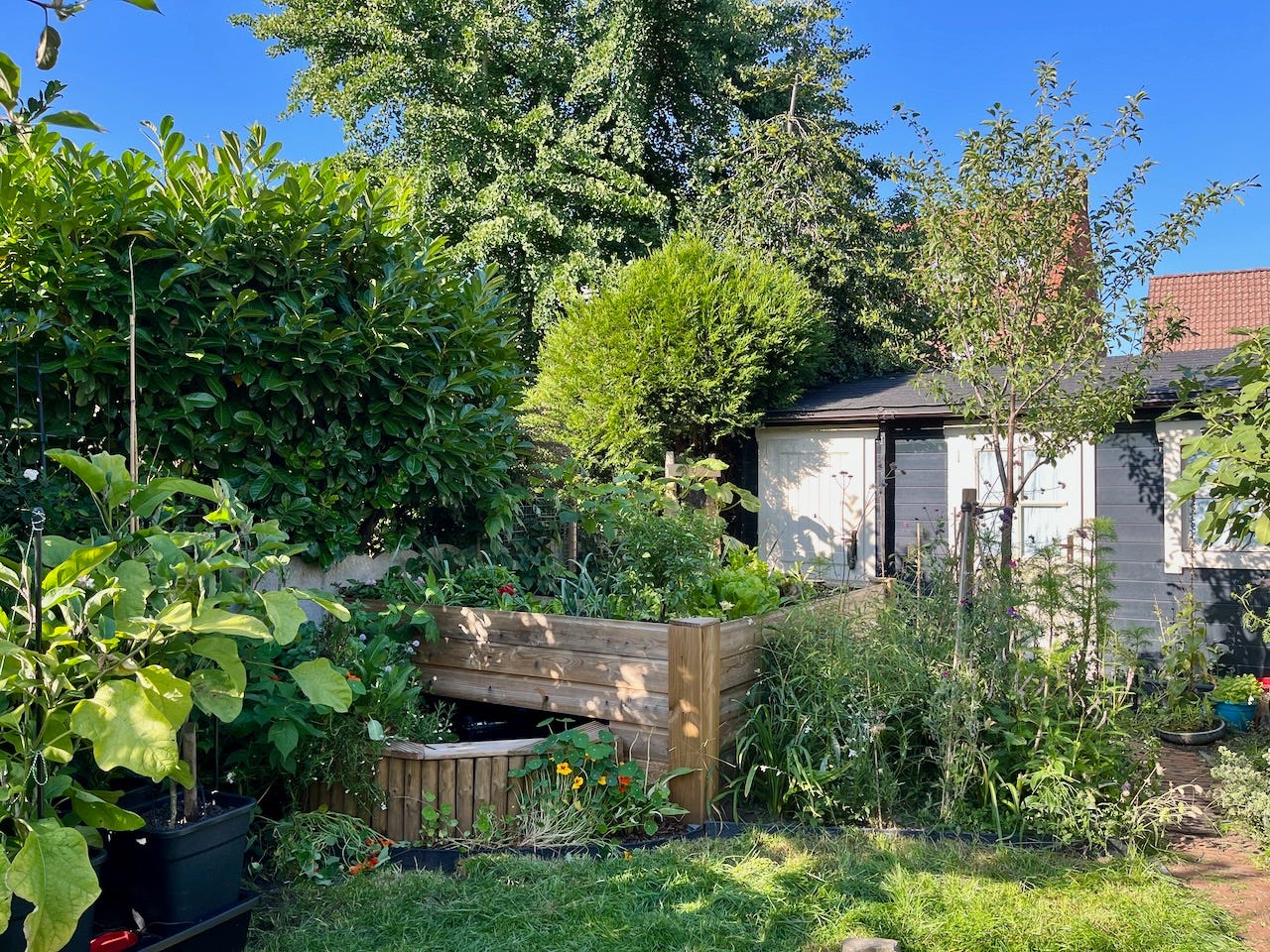
Setup
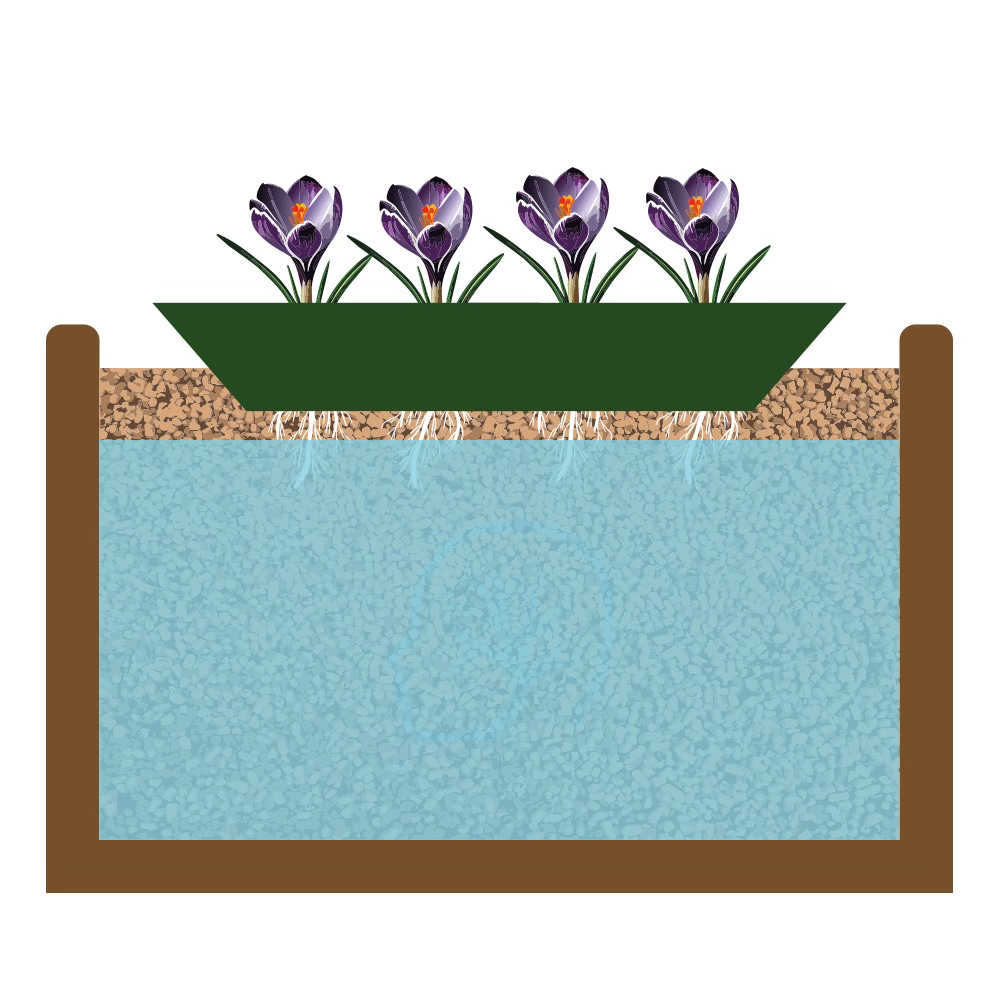
Flower bulbs tend to settle deeper into the soil, hence the decision to position them in specially designed hanging baskets for flower bulbs. With this concept, I had thought of placing the baskets just above the maximum water line of the setup. This way, the flower bulbs remain adequately dry during the ebb and flow cycle (20 minutes in my configuration). This allows root growth to develop and regulate naturally.
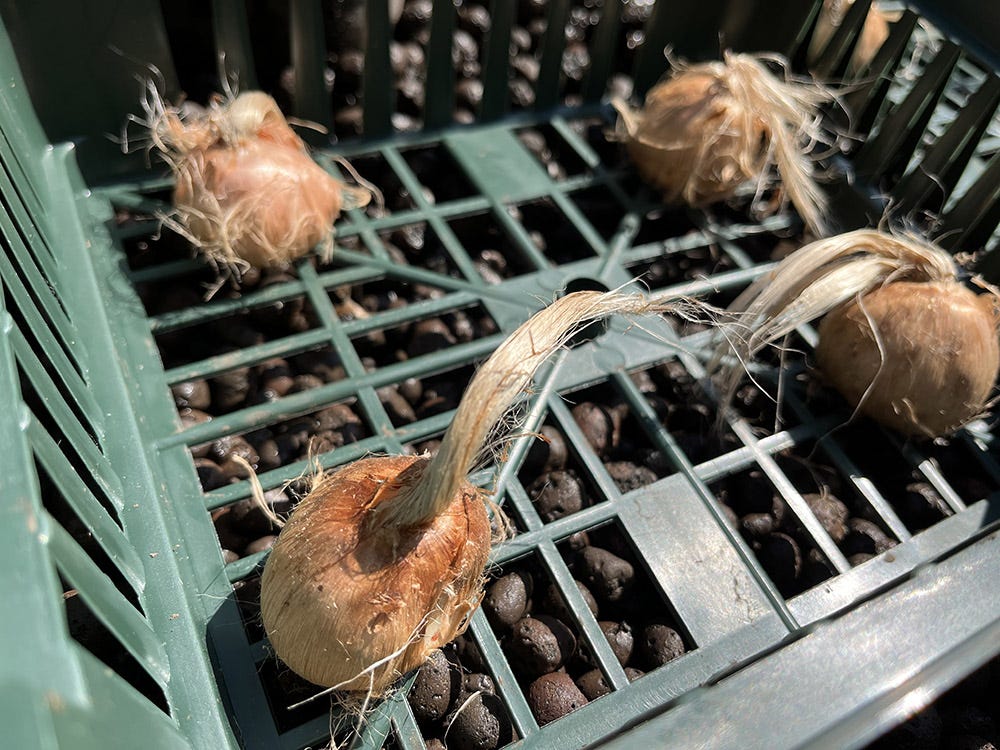
Progression of growth
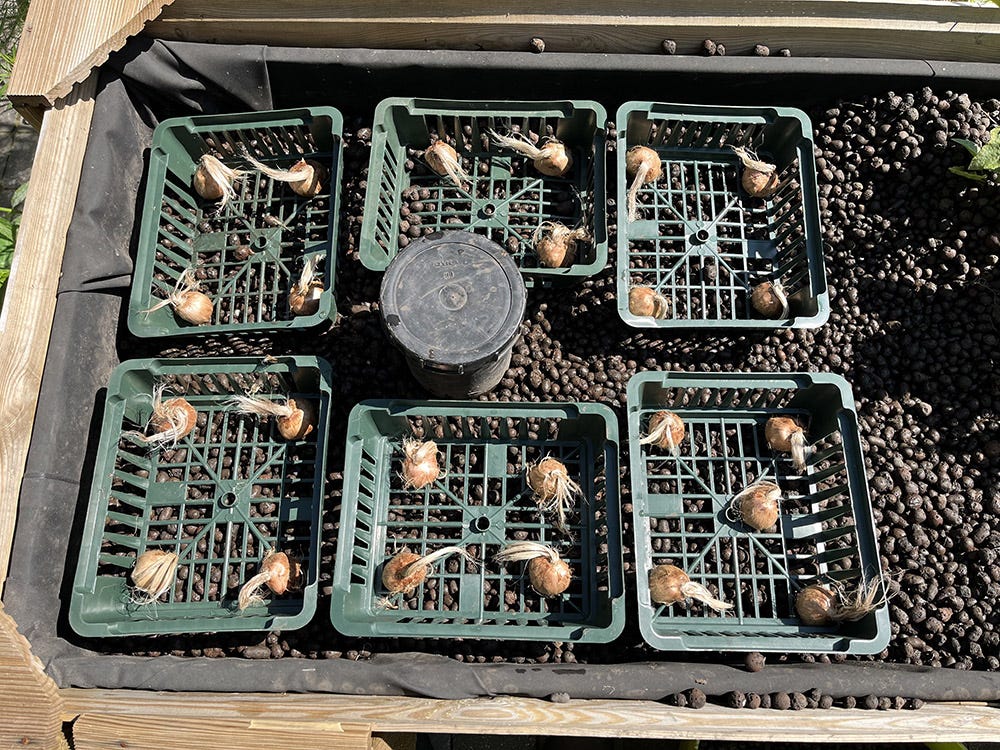
Aug. 10, 2023: beginning of the experiment
The baskets sit just at the maximum water line and are then filled with growing medium. In this case, with clay pellets. The wooden sticks placed is to prevent curious animals from digging or making a place to do their feces.
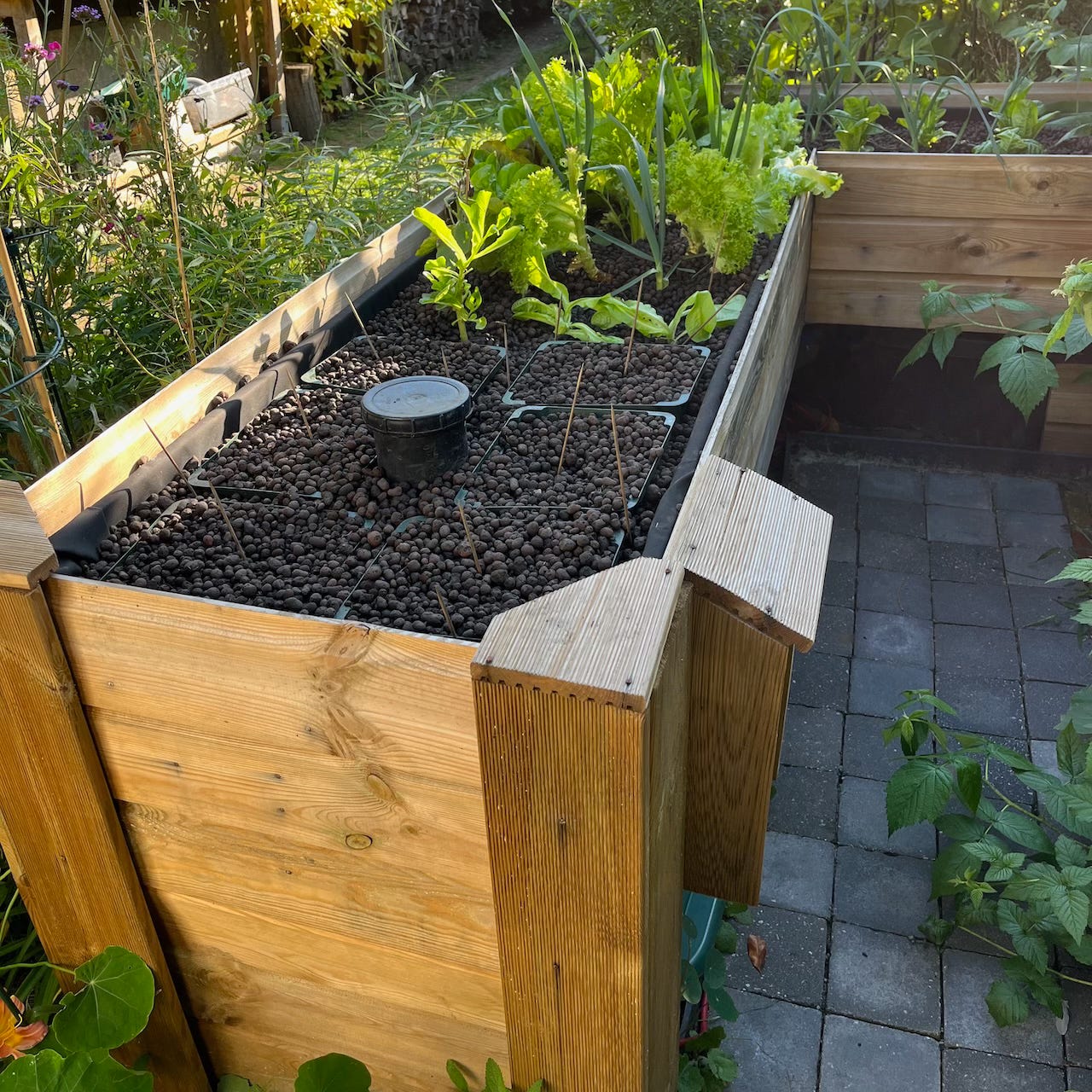
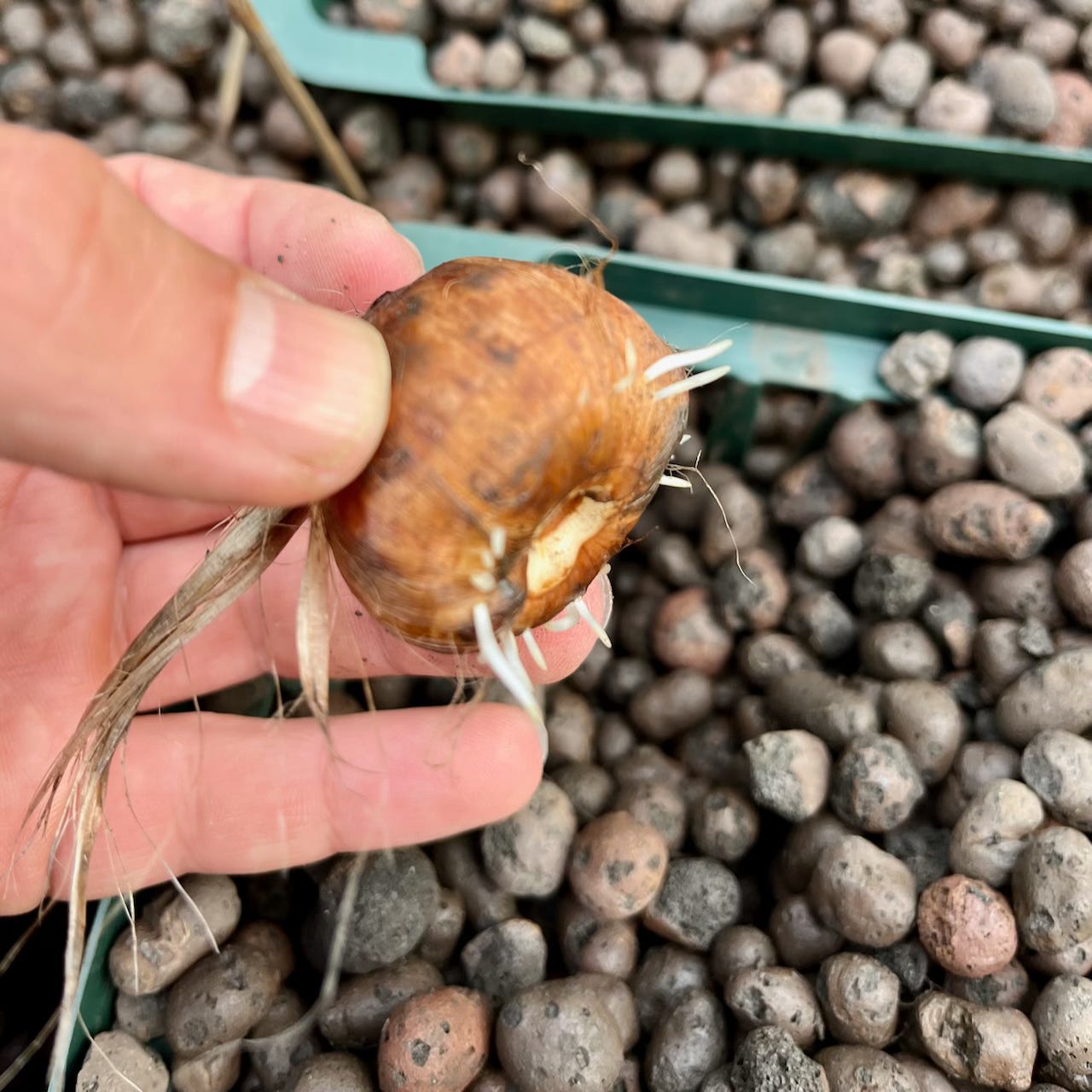
Aug. 29, 2023 (Day 19): initiation of root formation
After 19 days, we notice good germination of the root system. 25 bulbs were planted, of which 2 did not germinate.
Sep. 10, 2023 (Day 31): Activation of leaf and flower growth
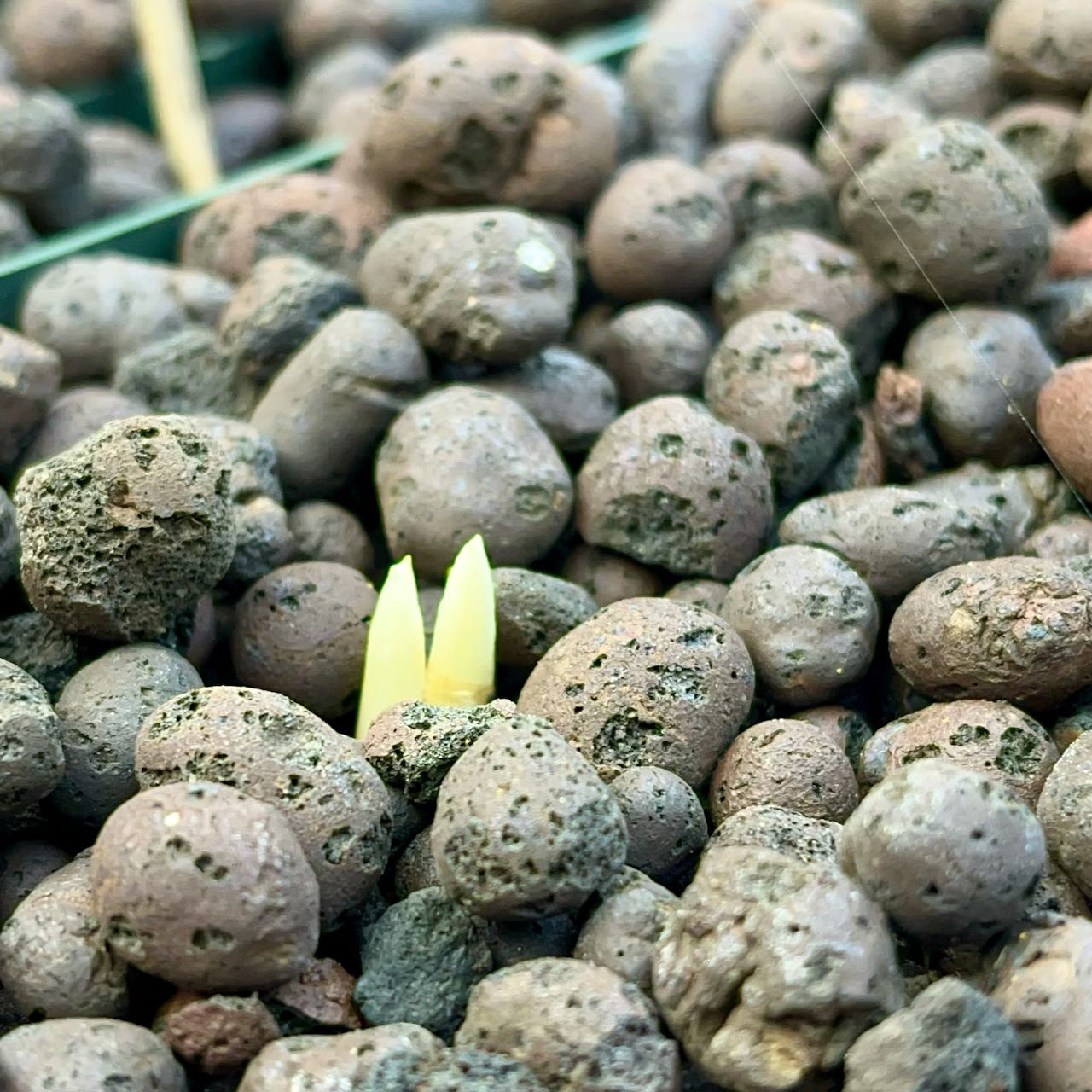
Oct. 1, 2023 (Day 52)
The vegetative phase of the flowers is already well developed now.
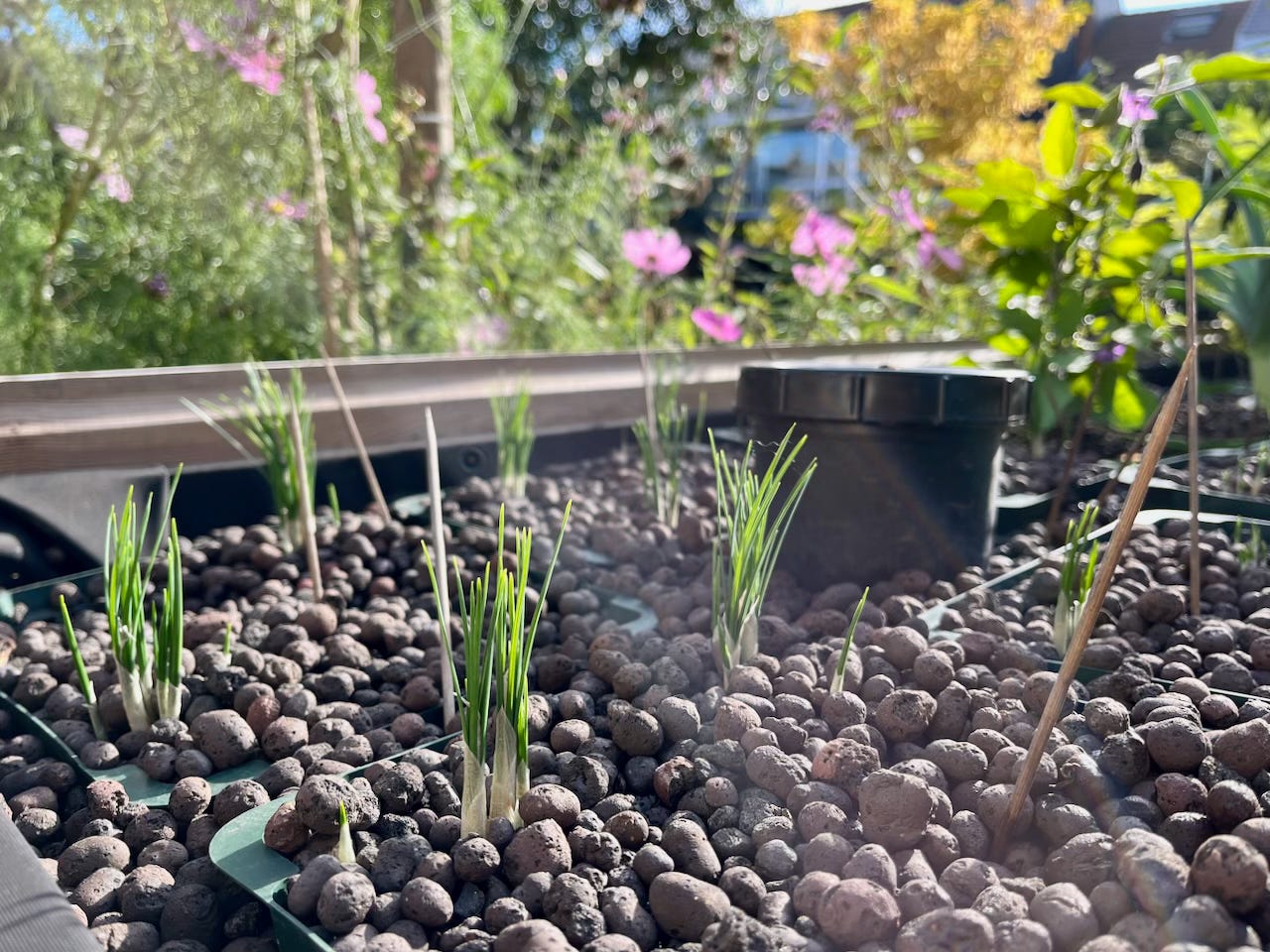
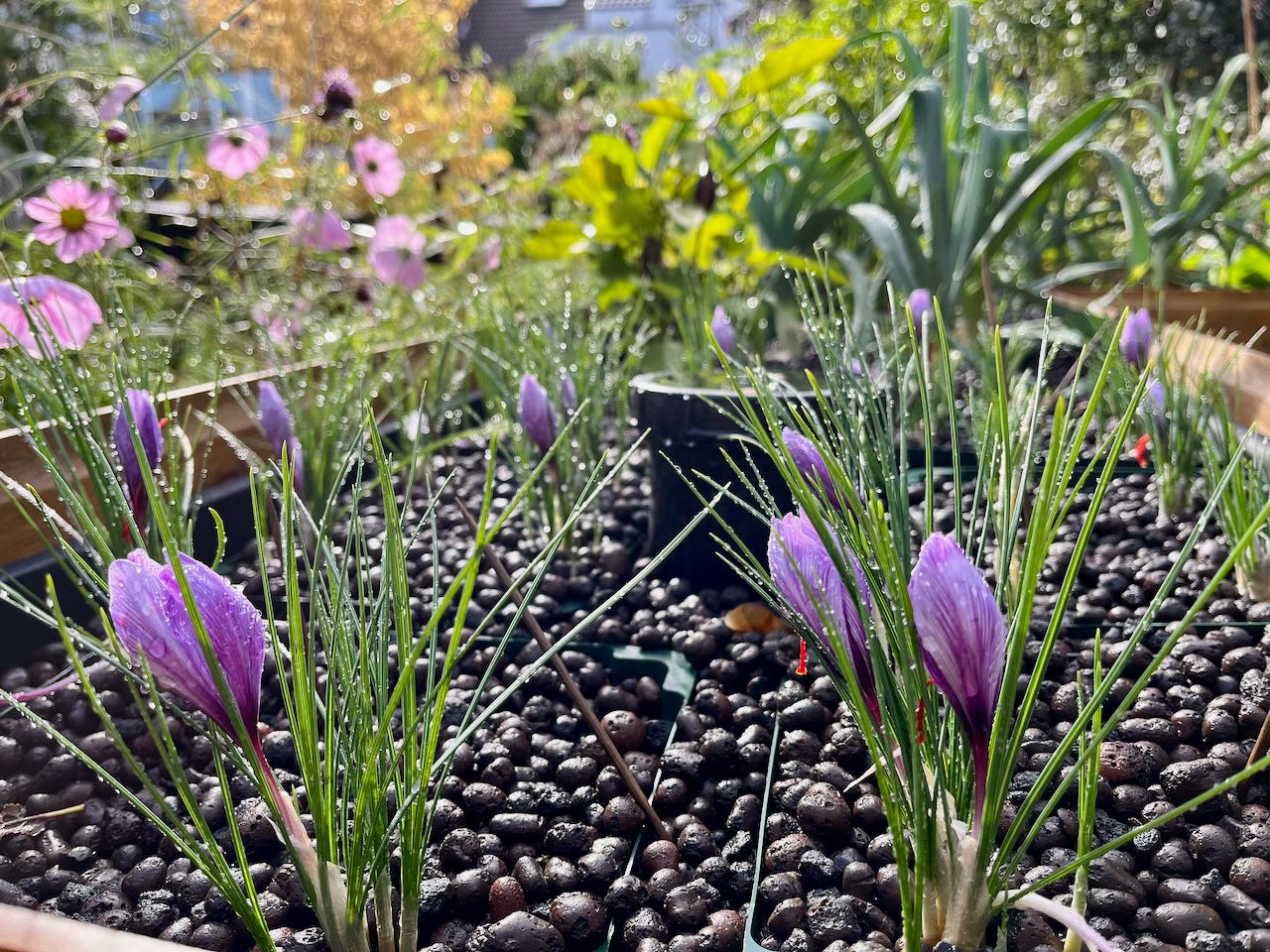
Oct. 15, 2023 (Day 67): Flower Stage
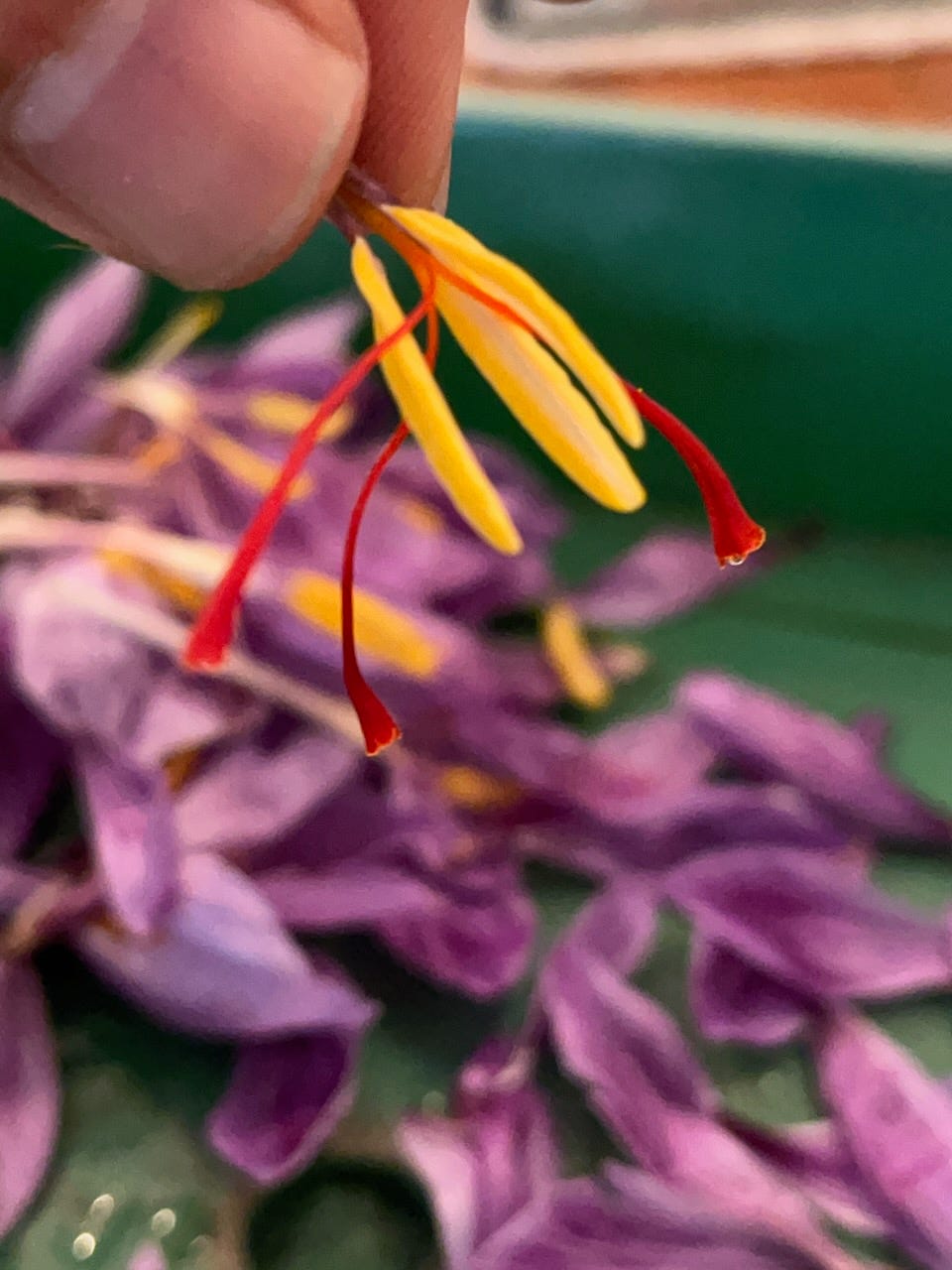
Suddenly things moved very quickly and flowers developed, on some bulbs even three flowers at once. It is best to harvest the flowers as soon as possible, even still in a closed flower. The saffron threads are then already fully developed.
You harvest the entire flower first, try to cut the flower as low as possible without damaging the leaves. This stimulates the bulb to produce new flowers. I have gotten flowers back up to three times on some bulbs.
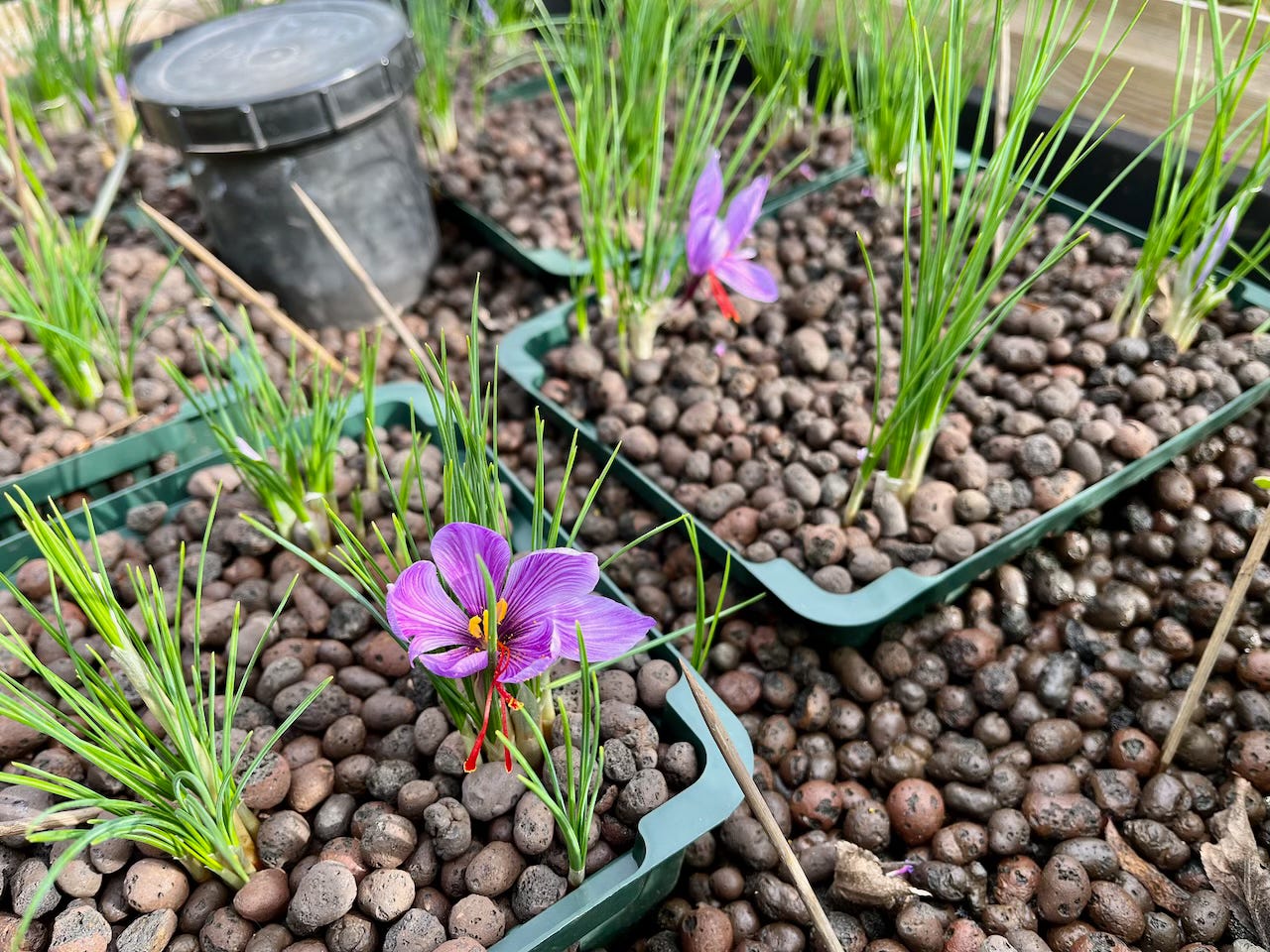
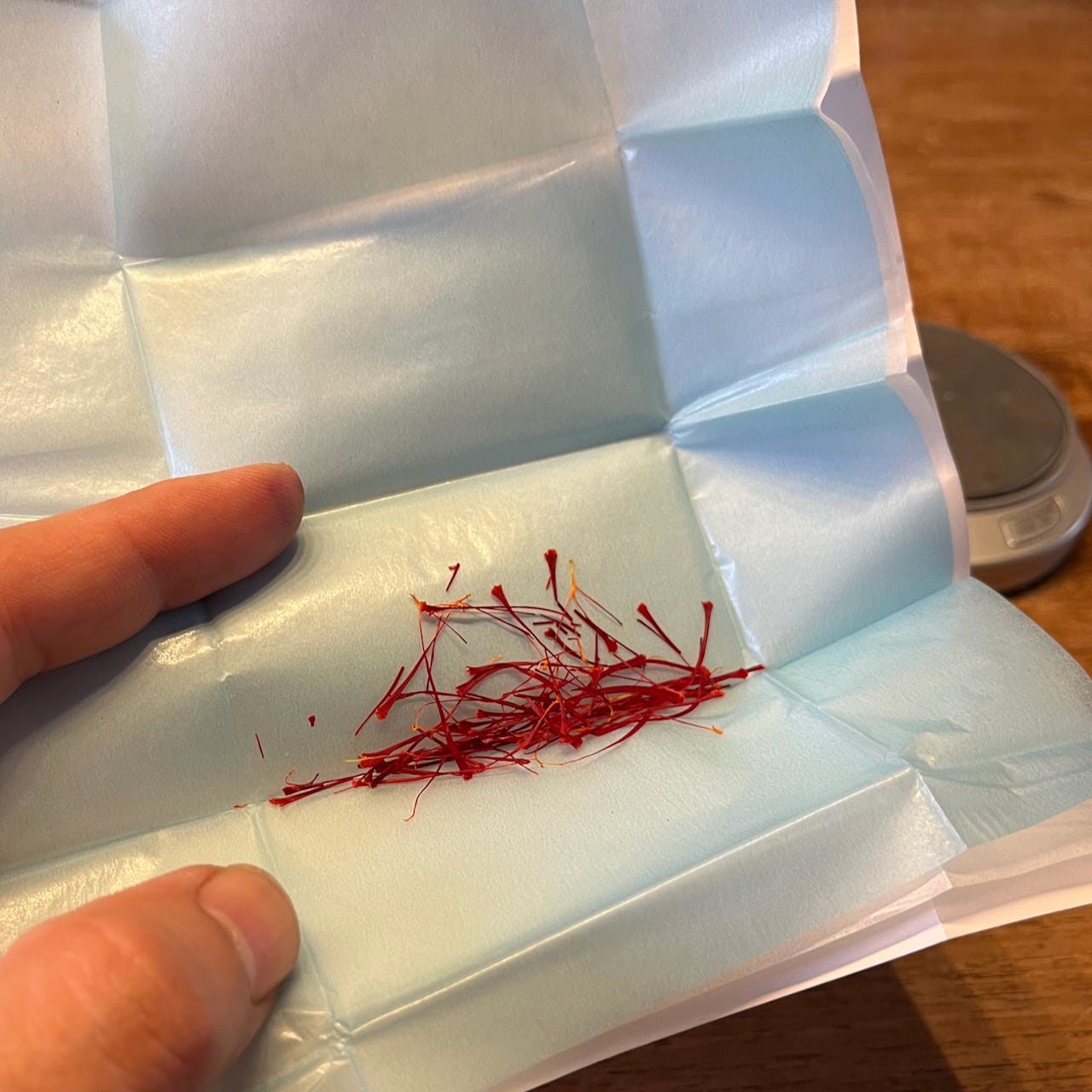
The harvested saffron must then be dried. I placed these threads between kitchen paper and then let them dry for several days.
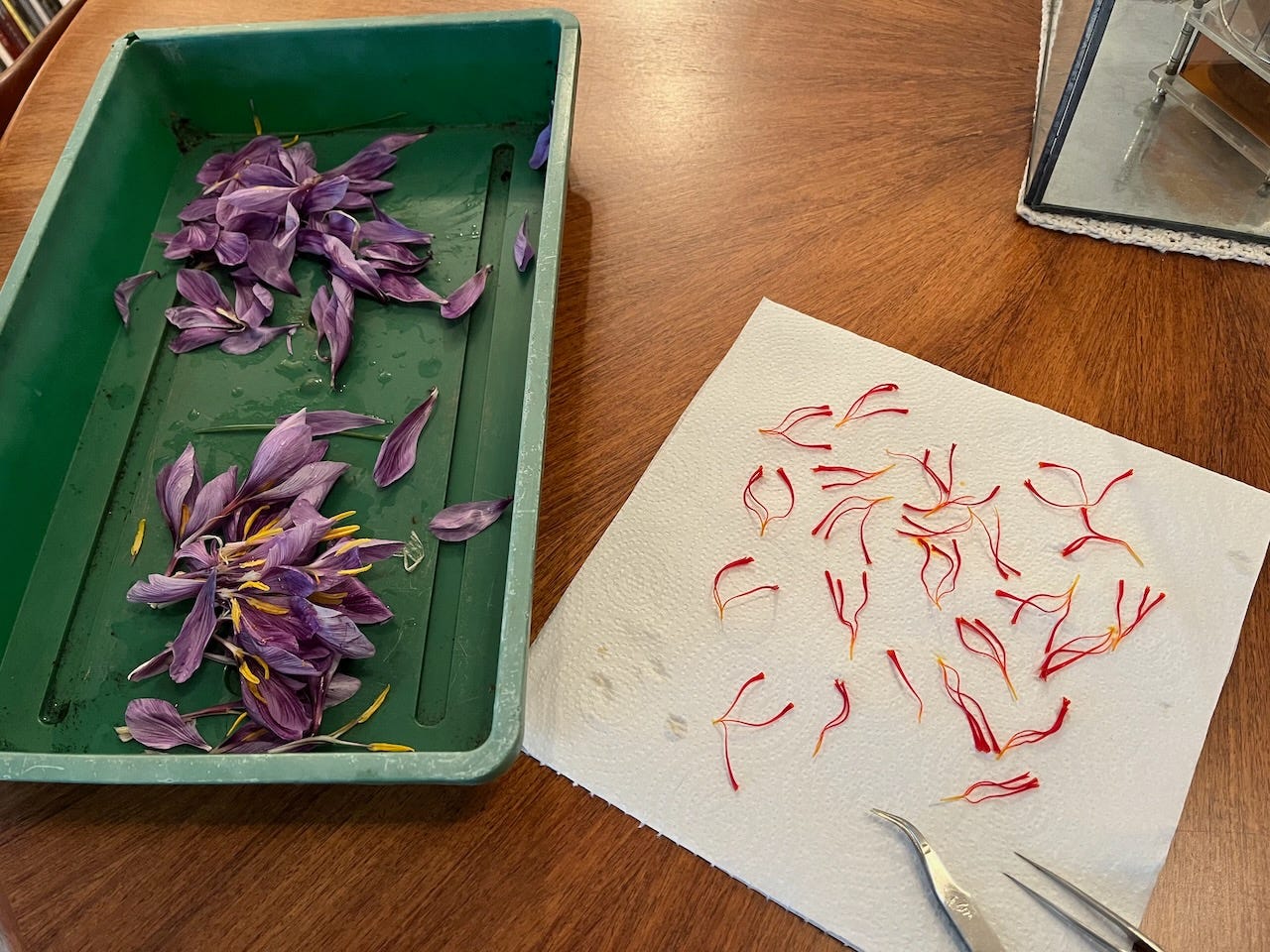
After the blooming period
Oct. 28, 2023 (Day 80)
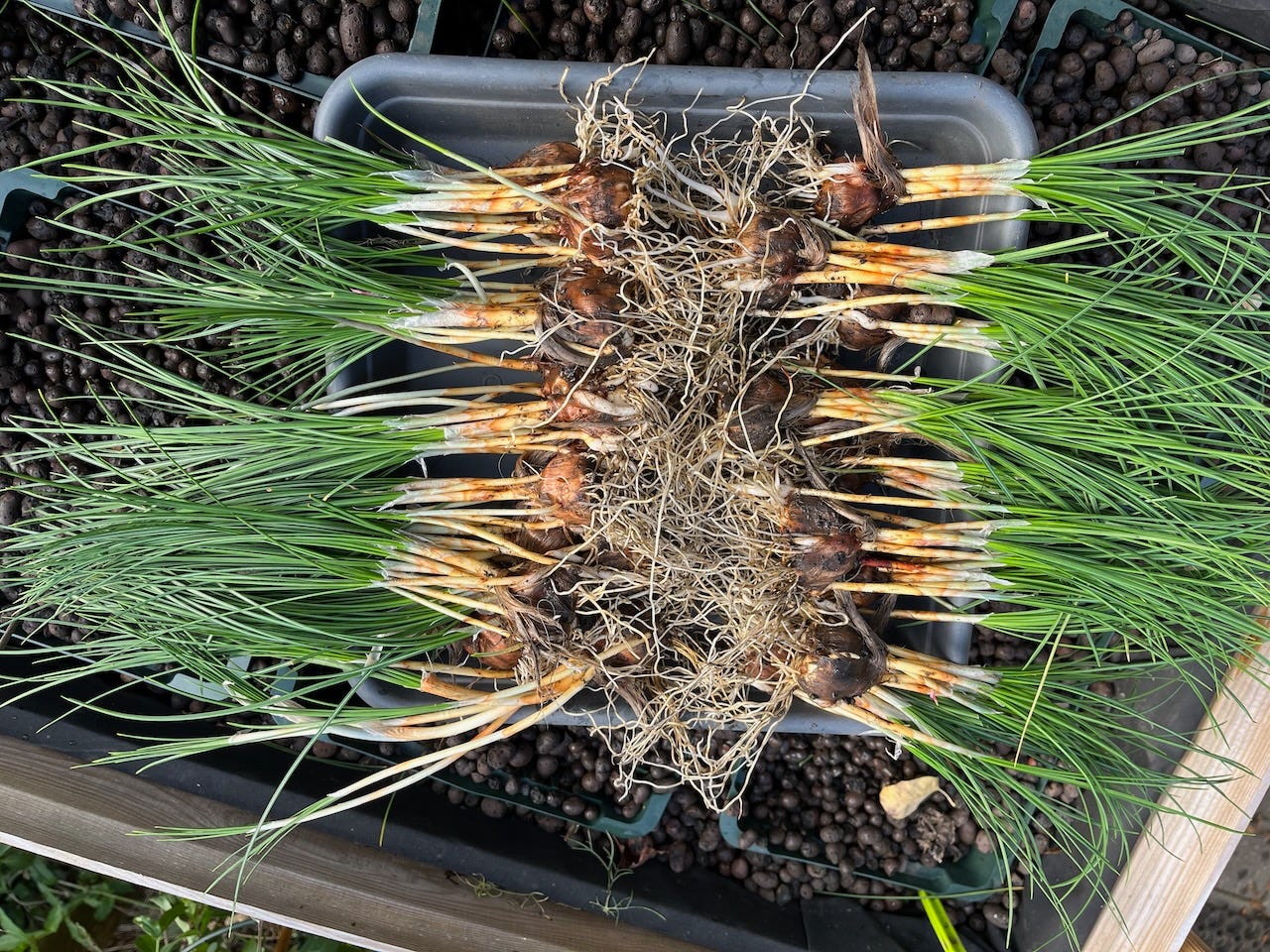
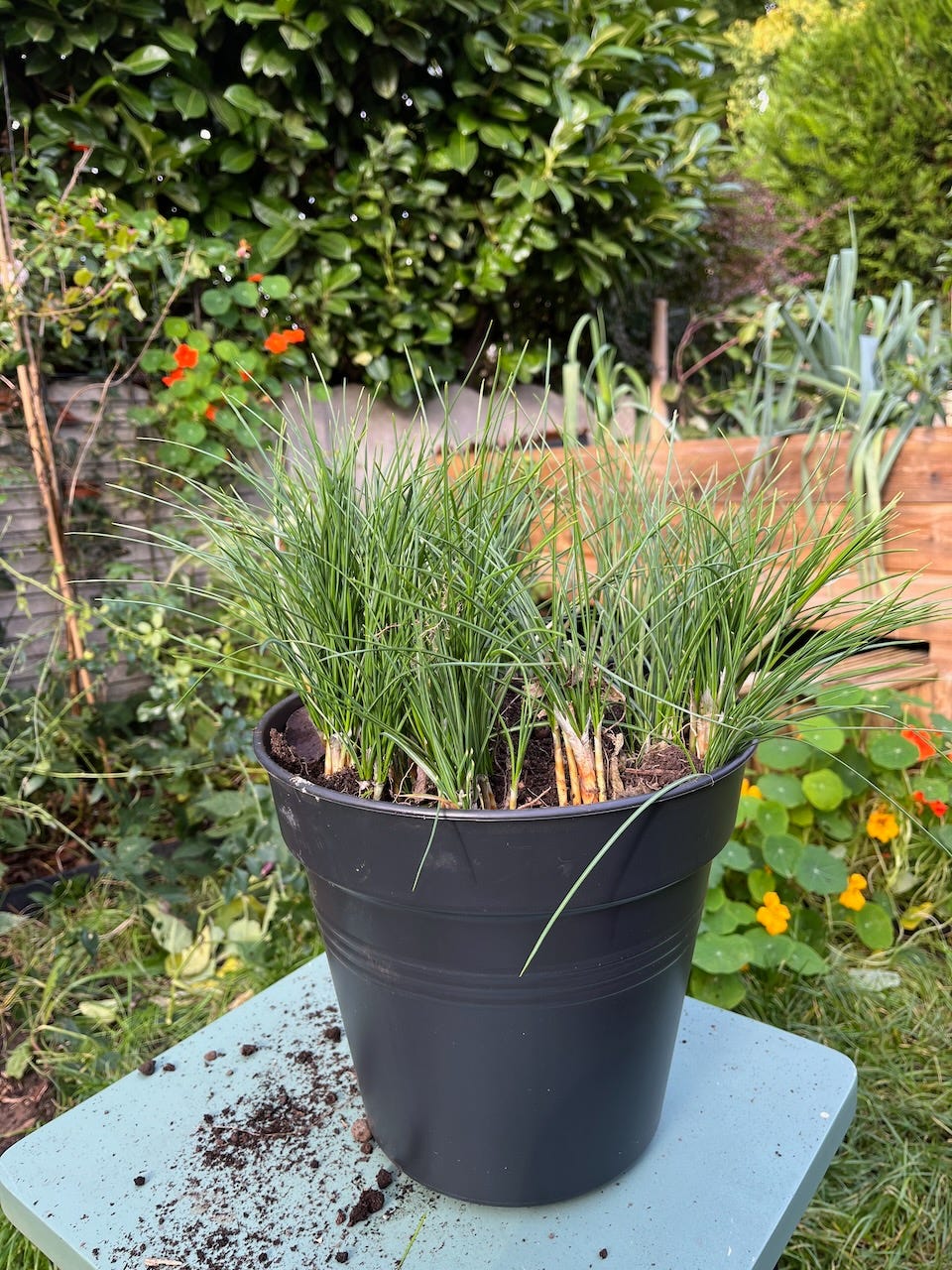
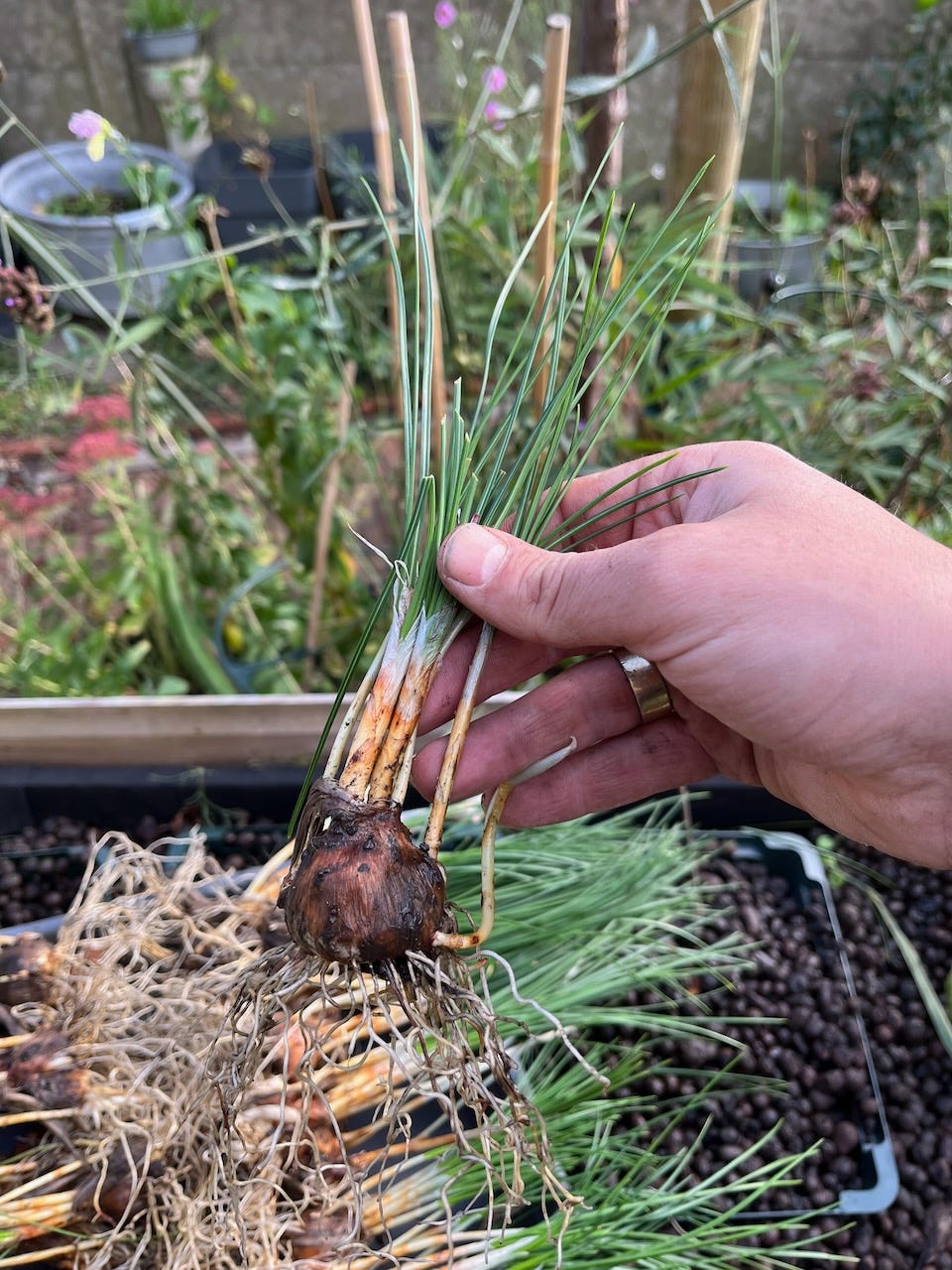
When no more flowers were produced I moved the bulbs to a flowerpot with soil. This allows the leaves to absorb additional energy through photosynthesis before they die. The bulbs will also multiply at this stage where we can put them back into the aquaponics system next year.
Conclusion
It is perfectly possible to grow saffron crocuses in an aquaponics setup.
If you observe the setup that the bulbs are not completely submerged but can just reach the water line with their roots. A successful experiment with a fantastic flower yield.